


My father gave us a final magic show.
He was here, he was gone, and then he was here again—more present in his final act than most people manage in entire lifetimes.
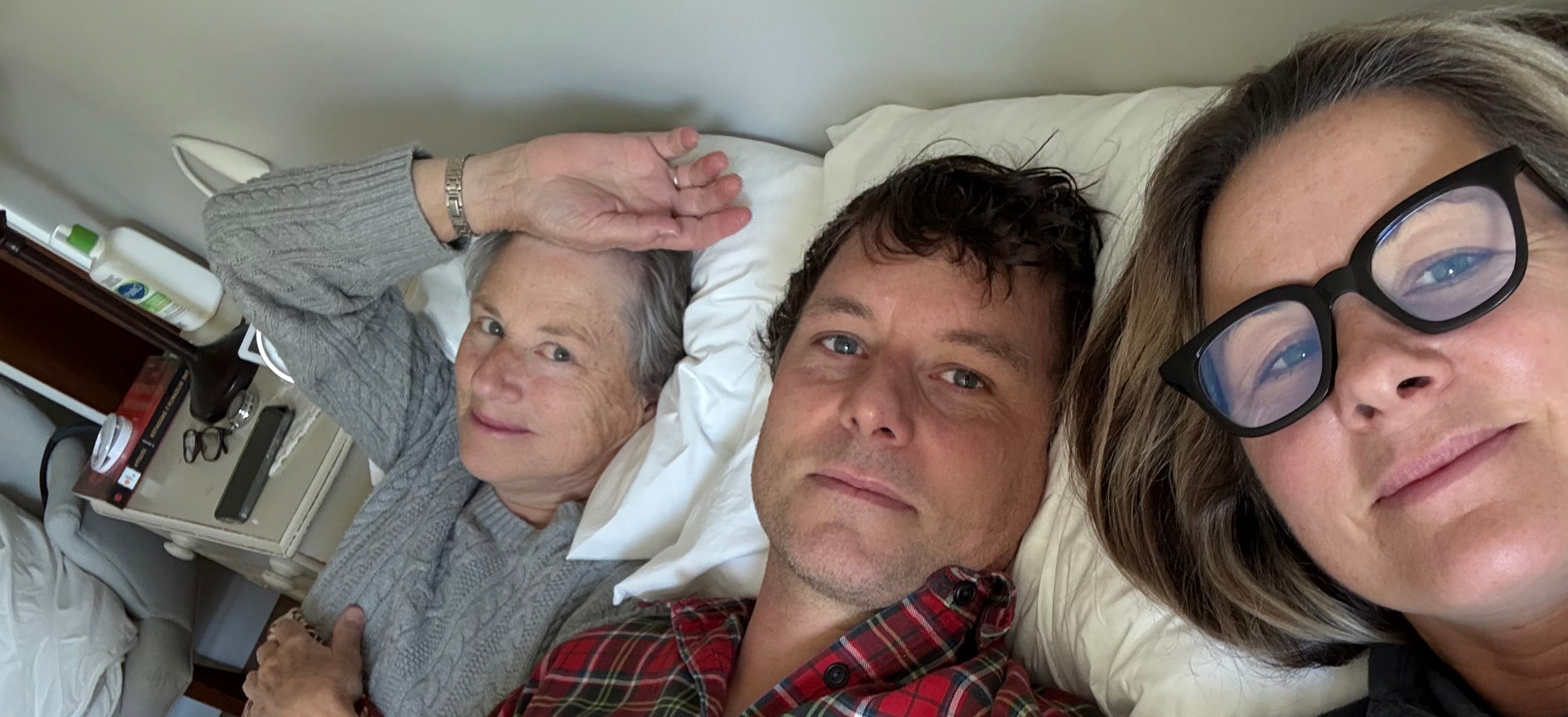
I'm writing about my father's death because my mother, brother and I all wanted to share something that might seem hard to imagine: the threshold of death can be amazing. Not in a morbid way, but in the most profound, sacred way possible—if we prepare for it.
If we talk about it openly.
If we truly listen to what the dying person wants.
If we align with each other.
If we're able to let go and let them die their way.
My father died at 4:00 p.m. exactly—arriving right on time, as he always liked to do. And in that final hour, he gave us a master class in how to exit this world with grace.
There he was, body shutting down from cancer, and somehow our entire house felt infused with peace. Not the forced, spiritual-bypassing kind of peace. The real thing. The kind that comes when someone has burned off everything false and arrived at what's actually true.
I didn't know death could feel like this.
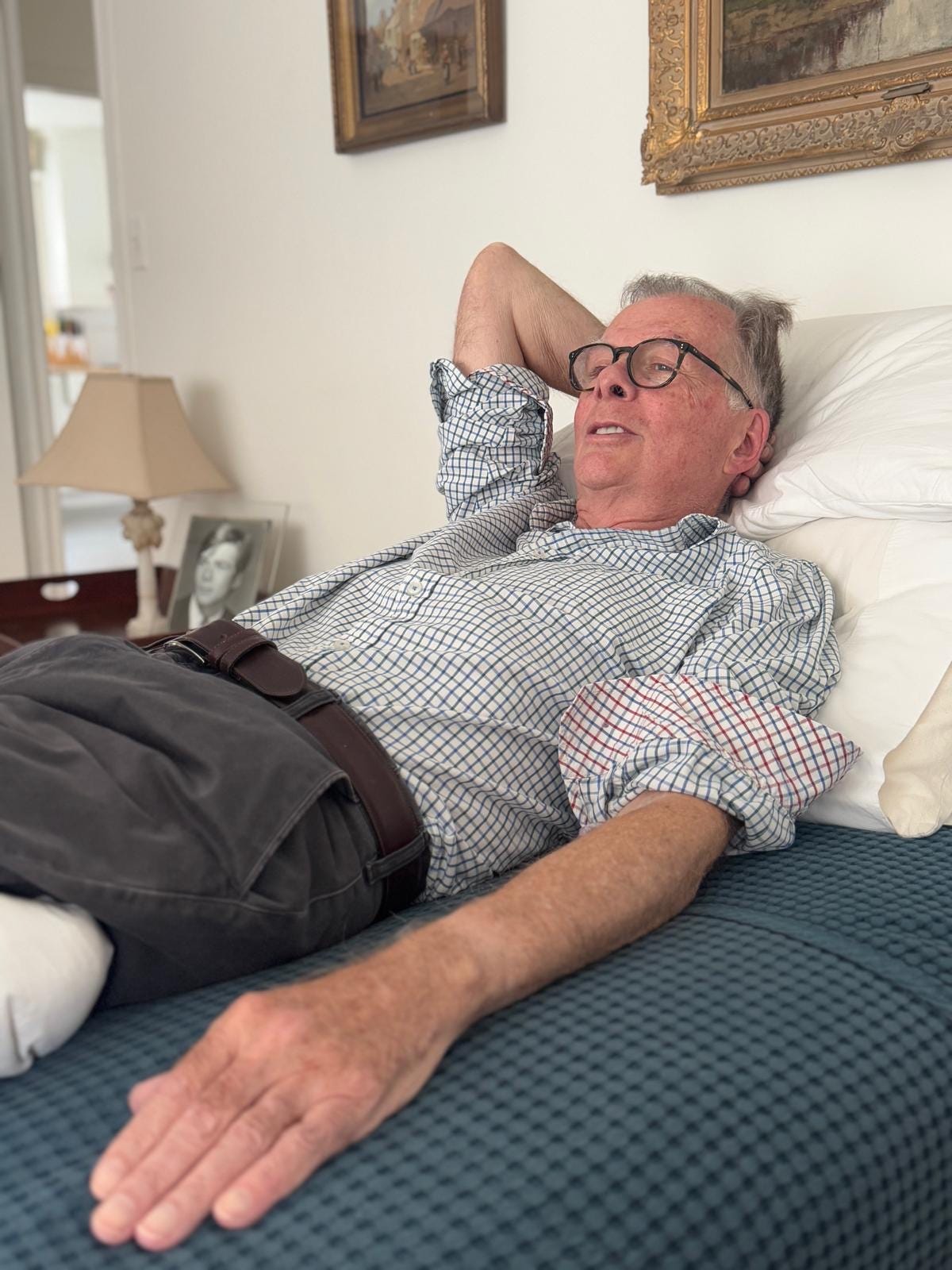
This is Dad, 5 minutes before he died. Making us smile.
Transitions Happen Even When We Die
I'm not a Buddhist, but I've learned from relatives who practice, and I love the concept of what Tibetan Buddhism calls the bardo of dying.
The term "bardo" simply means "transition" or "gap"—and Pema Chödrön teaches that we're always in some kind of bardo. But the bardo of dying is the specific transition from life to death.
Dad embodied that this ultimate transition could be met with curiosity rather than fear.
For weeks, he'd been peacefully cycling between a few of his favorite pastimes, wanting to soak in the flavors of his life with intention. Dipping into sweet sleep, gazing at old videos of trains chugging and planes taking off (his childhood machinery fantasies intact), and watching people eat elaborate foods while his own tastebuds and beloved appetite were fading.
On his last day, he performed his final ritual—the same one he'd done for weeks. Shower, shave, brush hair, dress in something nice. "Crisp, clean, freshly," as my daughter Sophia would say.
We helped him dress with such care—buttoning buttons, tucking in his shirt. The cancer had ravaged his body, but his dignity remained untouched.
"Robert, you don't want a belt, do you?" Mom asked. "It's going to be uncomfortable."
He looked at her with that resolute sparkle: "I want the belt."
I smiled. "Yes, Dad. Let's put it on, shall we?"
Even dying, he knew exactly how he wanted to show up.
The Burning Away
Watching Dad navigate his final weeks, I kept thinking about a concept I'd been studying for years—the alchemical process of calcination.
Think of it like this: if you put wood in a fire and let it burn completely, what's left? Just ashes. All the extra stuff—the bark, the leaves, the unnecessary parts—they burn away, leaving only the essential elements.
That's what I watched happen with my father's dying.
All the things that used to matter—his business reputation, what people thought of his decisions, the small daily frustrations—they'd burned away over the years. What remained was his essence. Scottish pragmatism mixed with deep love. Honesty without cruelty.
The substance is burned until nothing remains but what's true.
The Practice That Prepared Him
Practicing having a good death? Yup. This preparation for a good death has been years in the making for my dad. In 2015, Dad recorded a podcast about death for me and my brother. I guess it was a training manual of sorts.
"Status does not come from wealth or possessions. It comes from your contribution. Ask yourself what kind of a parent have you been? Have you looked after your own parents as they become fragile? What kind of a friend are you? This can never be taken away from you. So when you come to die, if you live like this, you can be satisfied that you have done the very best you can."
I watched him embody these words as he died.
Pema Chödrön writes: "How we live is how we die.”
For me, this is the most fundamental message.
Dad had been practicing this groundlessness his whole life. When he left banking to start his own business—groundlessness. When he moved our family across the country multiple times—groundlessness. When he chose truth over comfort in difficult conversations—groundlessness.
Every time life asked him to let go of control, he practiced. And now, facing the ultimate letting go, he was ready.
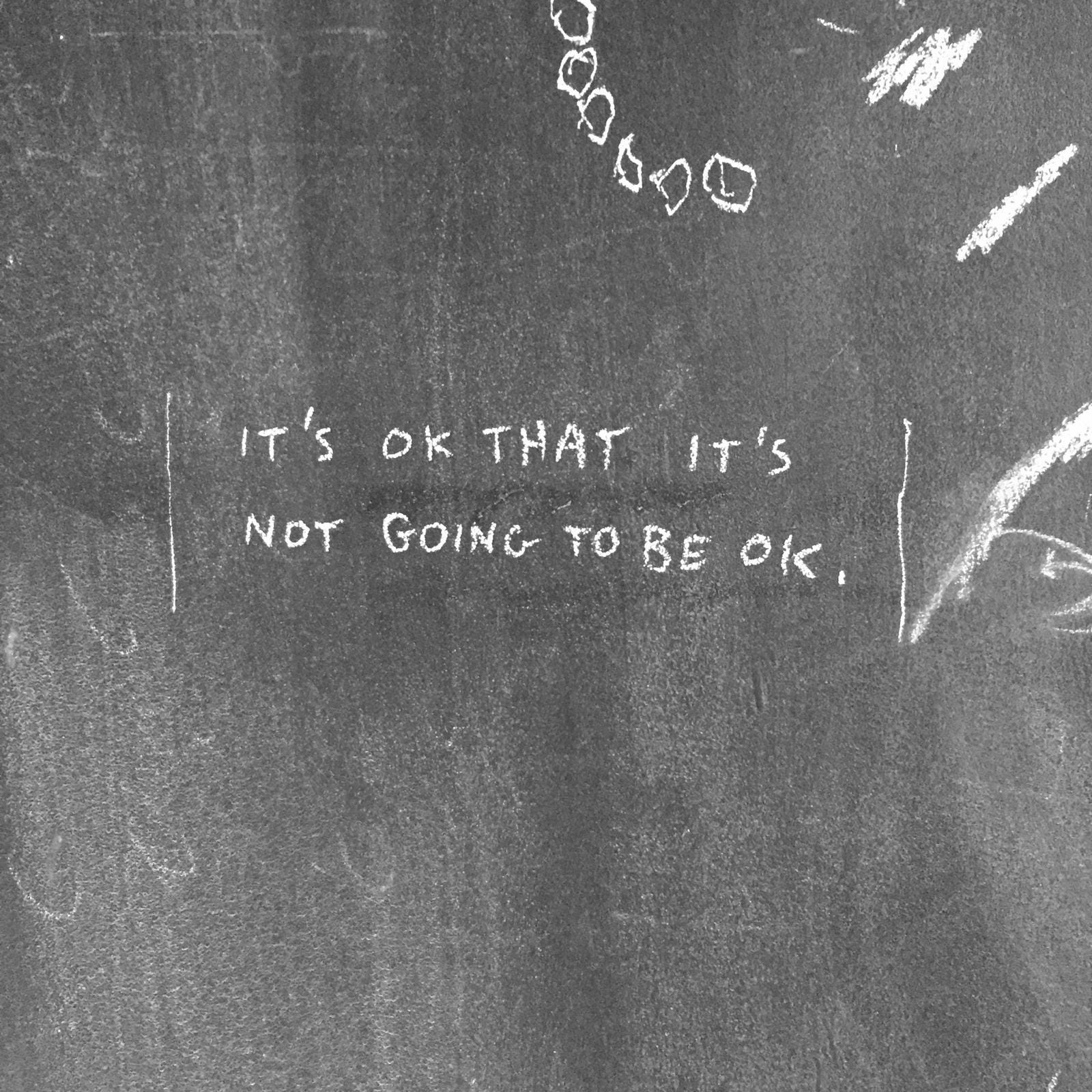
What Death Can Actually Look Like
Here's what I learned watching someone die consciously: death doesn't have to be something that happens TO you. It can be something you participate in with presence.
Dad was sad to leave us. He was frustrated his body was betraying him. He had moments of pain and confusion. He was human, not a saint.
But even in his final hour, he stayed present with whatever arose. When pain caught him, he'd ask for what he needed—water for his parched mouth, pillows arranged just so. When gratitude welled up, he expressed it clearly to his medical team. When readiness came, he announced it.
As Pema Chödrön teaches: "Whatever is happening, stay there—right with what you're feeling."
He modeled something profound: you can be afraid and peaceful simultaneously. You can grieve what you're losing while celebrating what you've had. You can be in pain and still show up with grace.
For me, this is what a good death looks like—not the absence of difficult emotions, but the willingness to feel them all without being consumed by them.
The Moment of Choosing
At 3:20—ten minutes before Dr. M and nurse Émilie arrived for his MAID appointment—we helped him to his deathbed in the living room. A makeshift but rather regal stage in the center of the room, bathed in light, surrounded by family photos and flowers.
James started sharing: "Dad, thank you. Thank you for being the best dad ever. Thank you for leading your life with so much dignity and honour"
I joined in about how much we loved him, how proud we were—of his life and his dying.
His eyes opened. He seemed to perk up: "I feel so much better now. I'm ready."
When the Doctor arrived, Dad met his eyes and smiled: "I'm just so fortunate. I'm so fortunate to have met you and the nurse. Your whole team has been such a blessing. Thank you."
We asked if he wanted us to hold his hands.
"No, I don't really want anyone holding me. You can just watch and be there for me."
So confident. So clear. My mother, brother and I held each other's hands instead. A circle of love around him.
"Does the death injection ever not work?" he asked.
"No," the doctor said. "It always works."
"Are you ready Rob?" Emily, our nurse asked.
"I'm ready. I'm excited to see what's in the next realm—the great mystery. Okay, let's do this."
Dad closed his eyes. First injection was saline. Second: the sedative for deep relaxation. His last words in his little English accent: "Oh, the pain is going..."
Third: muscle relaxant to stop his breathing muscles. Fourth: Light snoring began, then stopped.
Time of death: 4:00 p.m. exactly.
I felt the room fill with illumination—the luminous presence of our love. That morning, Dad had said, "I don't know what dying will be like, but I feel confident there will be a big release of energy."
And there it was—that energy downloading into our hearts, his magic whispering back into us.
We spent the next five hours basking in all of him. Hugging his little body, dancing around him, telling stories. For a man who lived in story, this became the story we'll tell everyone—spreading the word about what it means to perform such a graceful exit.
The Magic of Conscious Departure
What Dad showed me is that death can be a final act of love—not just for the person dying, but for everyone who witnesses it.
He wasn't frantically trying to fix relationships or achieve last-minute accomplishments. He wasn't performing bravery or pretending he wasn't scared. He was simply complete. Ready. At peace with the contribution he'd made.
His peace gave us peace. His courage became our courage.
The cycle of this courage will continue. I know my children have witnessed what's possible with death and will store that in their emotional hard drive. They've seen their grandfather face the ultimate threshold with curiosity instead of terror. They've watched him prioritize dignity over fighting. They've felt him choose love over fear, right until the end.
In his podcast years ago, Dad said: "Heaven is here today in this world, just as hell is too."
I finally understand what he meant. Hell is living disconnected from what actually matters. Heaven is feeling deeply, contributing meaningfully, and arriving at death satisfied with the life you've lived.
That's exactly how he died—satisfied, grateful, ready for the great mystery.
A Note of Gratitude
I want to express deep gratitude for Medical Assistance in Dying (MAID) and the brave souls who choose to support other humans in dying with intention when they feel the time is right.
Dr. M and nurse Émilie didn't just provide a service—they held sacred space for my father's final act. They honored his autonomy, respected his timing, and made his chosen departure possible with dignity and peace.
This is profound work. These healthcare providers show up for people at their most vulnerable moment, helping them cross the ultimate threshold on their own terms. It takes courage to stand witness to such sacred passages, and I'm grateful beyond words for their presence in Dad's final hour.
The Practical Magic of Dying Well
This isn't about achieving some spiritual ideal. It's about the practical work of living consciously so that death becomes a natural completion rather than a violent interruption.
Dad spent decades practicing what he called "The Jump"—choosing truth over comfort, contribution over accumulation, presence over performance.
As Pema Chödrön says: "Habituating ourselves a little every day to the basic groundlessness of life will pay large dividends at the end of life."
That's exactly what he'd done. And in his final performance, he showed us that the magician never really leaves the stage. He just steps behind the curtain, and if you listen closely, you can still hear the applause.
The big release of energy he predicted? We felt it downloading into our hearts, his essence becoming part of ours.
Not because he transcended being human, but because he fully embraced it—right until the end.
Death is the ultimate threshold. How we cross it depends entirely on how we've practiced living leading up to it.
Resources for Exploring Death and Dying
If this piece stirred something in you, here are some resources that have shaped my understanding of conscious dying:
Books:
How We Live Is How We Die by Pema Chödrön - Essential teachings on the bardos (transitions) and how our daily practice of being with uncertainty prepares us for death
Becoming an Alchemist by Catherine MacCoun - Explores the process of calcination and other alchemical transformations as metaphors for psychological and spiritual growth
Audio:
The Jump Podcast by Rob Paterson (thejump.me) - My father's exploration of breaking free from external expectations to live with authentic self-determination. Episode 8 specifically addresses death
Medical Support:
Medical Assistance in Dying (MAID) - For those facing terminal illness who want to explore end-of-life options with dignity and choice. Available in Canada and several other countries
Want to Support My Work?
Join other humans receiving bi-weekly sparks of clarity, connection, and the courage to cross the thresholds that matter.
Please reStack or share if this lit something in you.
With tenderness,
Hope


